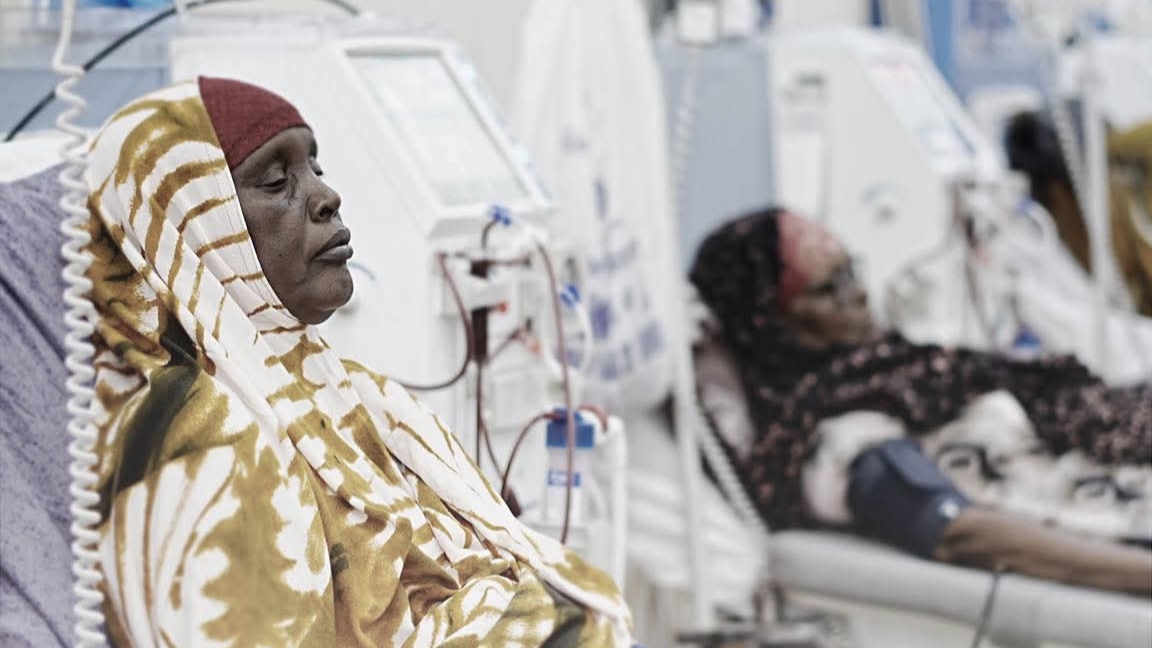
Kidney Dialysis Center in Mogadishu: Extending Hope with Support from King Salman Relief Center
In the heart of the Somali capital, Mogadishu, a kidney dialysis center continues its daily mission of providing support to patients suffering from kidney failure, as part of the humanitarian efforts backed by the King Salman Relief Center for Relief and Humanitarian Aid. This medical facility has become more than just a healthcare institution — it has grown into a daily refuge for dozens of patients who depend on regular dialysis sessions to survive.
The center provides periodic dialysis sessions alongside specialized medical care that patients require at various stages of their treatment. The medical staff working there strive to create a therapeutic environment that takes into account the human dimension of care, easing the psychological and physical suffering faced by kidney patients, who often need dialysis sessions multiple times a week — sessions that cannot be delayed or interrupted.
Kidney failure is considered one of the most exhausting chronic conditions, both for the patient and their family, as it requires continuous treatment that cannot tolerate postponement or disruption. From this standpoint, having a specialized dialysis center in Mogadishu represents a significant addition to health services in Somalia, a country already suffering from a severe shortage of medical infrastructure due to years of crises and conflict.
The support provided by the King Salman Relief Center to this facility comes as part of a series of humanitarian projects targeting the health sector in Somalia, aimed at easing the burden on the most vulnerable patients and ensuring they continue to receive the medical care they need without interruption. Dialysis patients, in particular, are among the most fragile groups, since any disruption to their sessions can lead to serious health complications that may become life-threatening.
These ongoing humanitarian efforts reflect the importance of partnership between charitable organizations and the local health sector in confronting the health challenges facing the most vulnerable communities. With every dialysis session performed at this center, a new story of hope is renewed for a patient who finds in this support an opportunity to continue living with dignity, amid the difficult health and economic conditions the country is experiencing.
The ultimate goal of these initiatives remains enabling patients to receive the treatment they need regularly, free from the anxiety of its interruption or absence — embodying the philosophy of humanitarian work built on continuous giving and confronting suffering wherever it exists.