Early Detection of Breast Cancer: A Few Minutes Each Month Can Change the Course of a Life
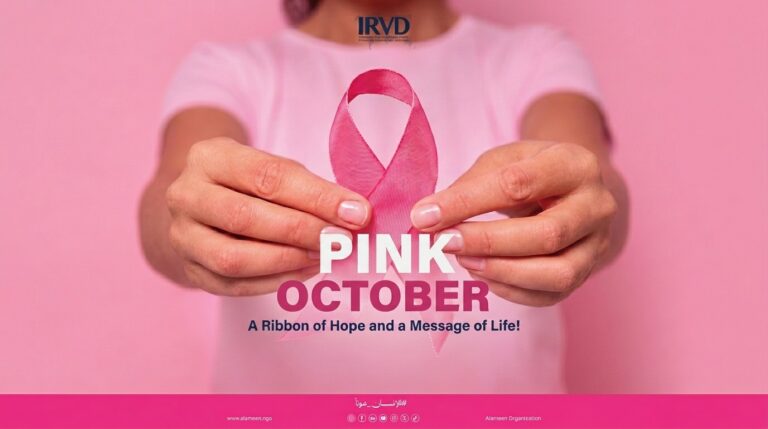
Every October brings an important human message: it is the worldwide Breast Cancer Awareness Month. In Syria, as everywhere, this message is addressed to every woman and every family: your health deserves a few minutes of your attention each month.
Breast cancer is one of the most common cancers among women around the world, but it is also a disease in which the chances of treatment and recovery rise greatly when it is found early. When a tumor is small and has not spread to other parts of the body, treatment options are broader and simpler, and the outcomes are much better. This is why doctors keep repeating the same rule: early detection makes a big difference.
Why do some women delay screening?
Many women put off screening out of fear of the result, embarrassment, being busy with family responsibilities and daily life, or the belief that no pain means no disease. In truth, tumors in their early stages most often cause no pain, so we should not wait for pain before paying attention. Screening is not a source of worry but a source of reassurance. If the result is clear, a woman can feel at ease, and if something needs follow-up, treatment begins at the right time.
The monthly self-exam: a simple habit that protects your health
A self-exam helps you learn the normal look and feel of your breasts, so you quickly notice any new change. It needs no equipment and costs nothing. Here is how to do it:
First, choose a fixed day each month. It is best to do it a few days after your period ends, when the breasts are less swollen and tender. If your periods have stopped, choose a date that is easy to remember.
Second, stand in front of a mirror with your arms at your sides, then raise them above your head. Observe the shape and size of the breasts and the color of the skin and nipples, and notice any new difference between the two sides.
Third, examine by touch. Use the pads of your fingers in gentle circular movements, then slightly deeper, covering the whole breast from the collarbone to the bottom of the breast, and from the armpit to the middle of the chest. Check both breasts as well as the underarm area.
Fourth, repeat the exam while lying on your back, since this position spreads the breast tissue more evenly and makes any lump easier to feel.
Fifth, look at the nipples and check for any discharge or change in shape.
Signs that should never be ignored
Most changes that appear in the breast are not caused by cancer, and many lumps are benign. But only a doctor can tell them apart through examination and imaging, so do not dismiss any abnormal change. See a doctor if you notice:
- A new lump or thickened area in the breast or under the arm.
- A change in the size or shape of the breast.
- Puckering or dimpling of the breast skin.
- Redness, scaling, or thickening of the skin.
- A nipple turning inward or changing position.
- Nipple discharge, especially if it is bloody or comes out on its own.
- Persistent pain in one spot that does not go away.
Remember that delay is the real danger, and that seeing a doctor at the first sign is an act of courage, not a reason for fear.
A self-exam complements medical screening; it does not replace it
A self-exam raises your awareness of your own body, but it does not replace a clinical exam by a doctor or a mammogram, which can detect very small tumors before they can be felt by hand. Recommendations on the right age to start mammograms and how often to repeat them vary depending on a woman’s age, family history, and risk factors, so it is best to ask your doctor about the schedule that suits your situation.
Who needs to pay closer attention?
The likelihood of developing breast cancer increases with age, with a family history of breast or ovarian cancer, and with certain inherited gene mutations. Obesity, lack of physical activity, and alcohol consumption are also linked to a higher risk. Even so, many women who develop the disease have no known risk factors, so awareness and regular screening matter for every woman. Men can also develop breast cancer, although it is rare, and they should see a doctor if they notice any lump or change.
Habits that support your health
- Maintaining a suitable weight and exercising regularly.
- Eating plenty of vegetables and fruit and following a balanced diet.
- Avoiding smoking and alcohol.
- Breastfeeding when possible, as it has been linked to a lower chance of developing the disease.
- Keeping up with regular check-ups on schedule.
- The role of family and community
Awareness is a shared responsibility. When a mother encourages her daughter, a sister reminds her sister, a husband supports his wife, and a brother accompanies his sister to the doctor, we build a more aware community that is better able to protect its women. A kind word and sincere support may be exactly what a woman needs to overcome her fear and take the first step.
And do not forget that many women who recovered had noticed early and acted quickly. So be the one who notices and acts.
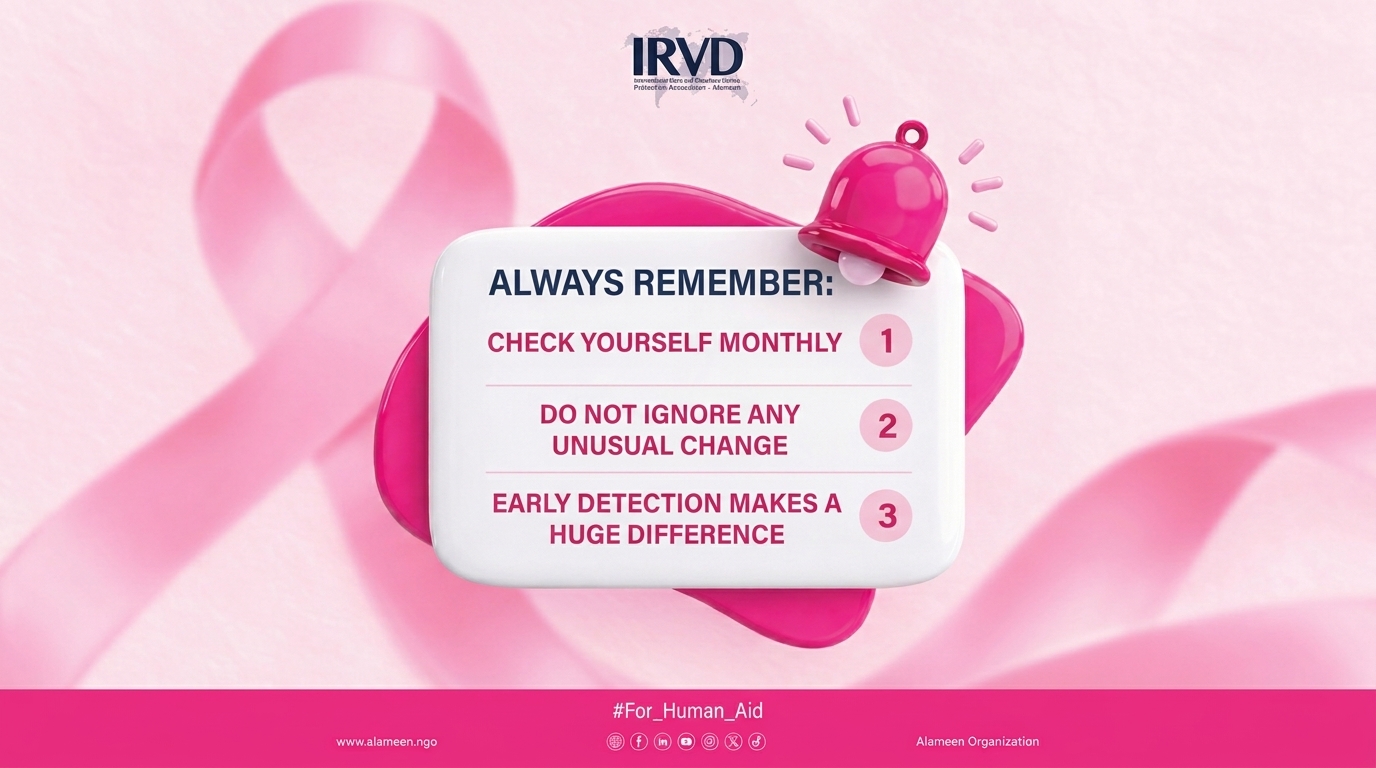
Always remember:
- Examine yourself monthly.
- Do not ignore any unusual change.
- Early detection makes a big difference.